
Livestock Sector Guide
Comprehensive Somaliland Economy Sector Guide By SomalilandBIZ
Livestock is the foundation of Somaliland’s economy and the objectives of this Sector Guide includes the following:
a) Provide a historical overview of Somaliland’s livestock sector
b) Provide the key statistics and data points for Somaliland’s livestock sector
c) Provide an overview of the key players in the livestock sector
d) Offer an overview of the regulation governing Somaliland’s livestock sector
e) Outline the key challenges facing the livestock sector in Somaliland
f) Identify future opportunities in Somaliland’s livestock sector
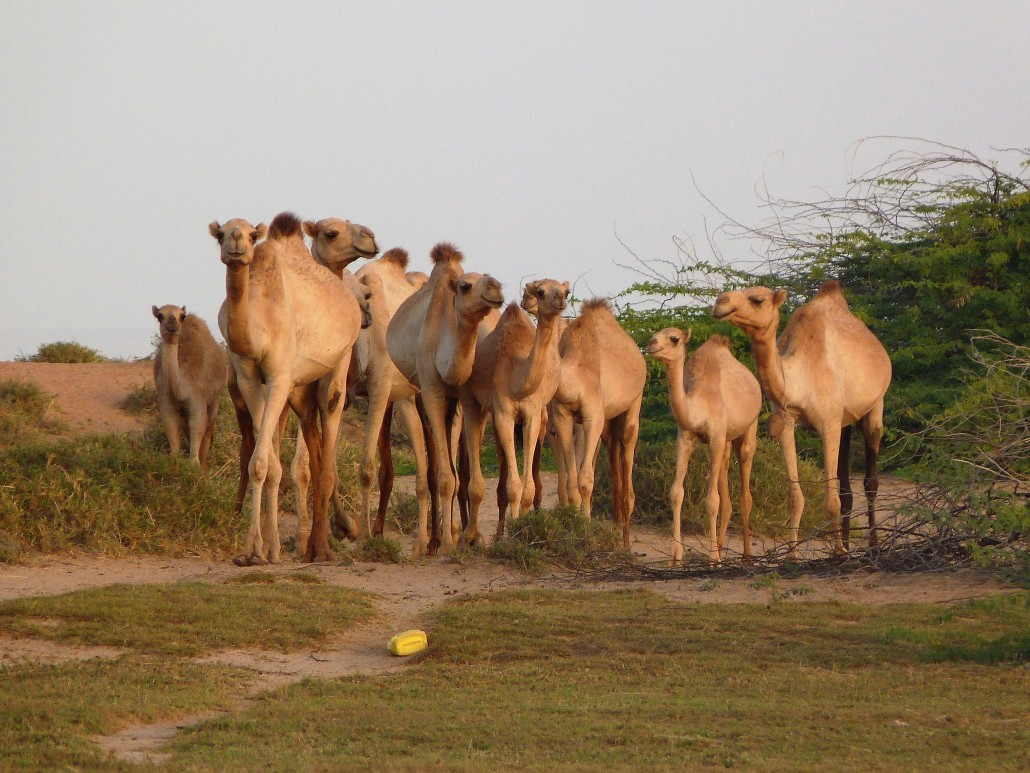
- Sector employs 70% of the population
- Contributes to 60% of GDP
- Makes 85% of foreign export earnings
- Sool, Sanaag and Togdheer regions account for 75% of all livestock
- Sheep and goats account for 91% of all animal exports
1. Introduction
1.1 General background and introduction to the Livestock industry in Somaliland
1Somaliland Trade, Exports and Imports: An Overview. Developing Country Studies. Vol.6, No.12, 2016 (PDF Download Available). Available from: https://www.researchgate.net/publication/307513306_Somaliland_Trade_Exports_and_Imports_An_Overview_Developing_Country_Studies_Vol6_No12_2016
1.2 History of sector – livestock intertwined with culture
1.3 Role of Livestock in Somaliland
2. Sector in Numbers
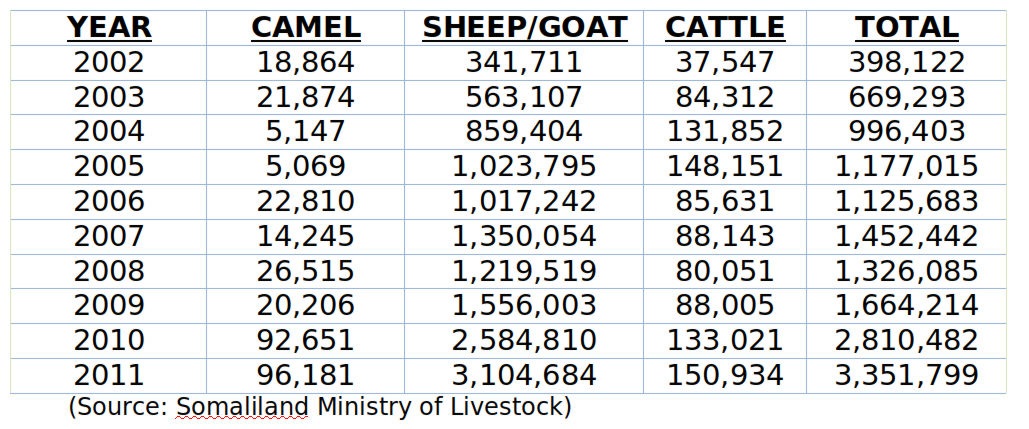
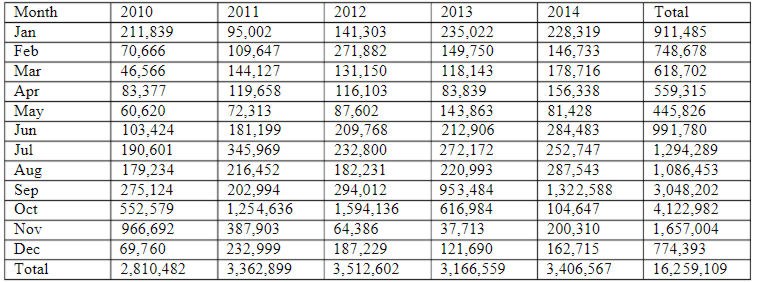
Somaliland’s livestock market is disproportionately affected by the policies of key export markets such as the Kingdom of Saudi Arabia which it exports to for the busy Hajj season. In 2016, the Kingdom banned livestock exports from both Somalia and Somaliland due to an unknown illness among livestock. However, in July 2017, Saudi Arabia lifted the ban and Somaliland was able to resume exporting millions of sheep and goats for the busy Hajj season in Saudi Arabia.
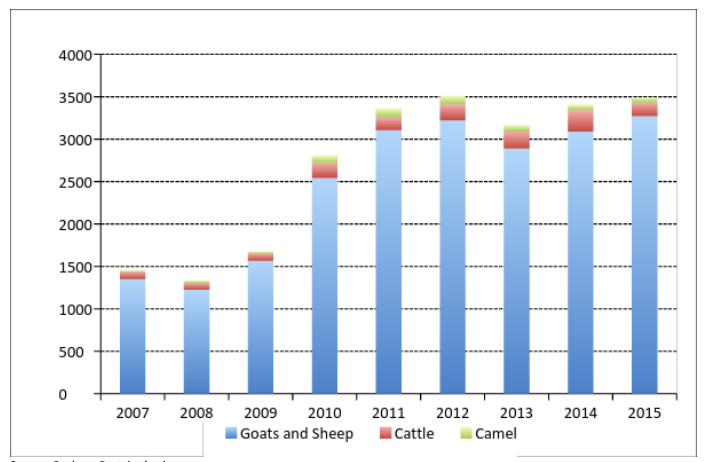
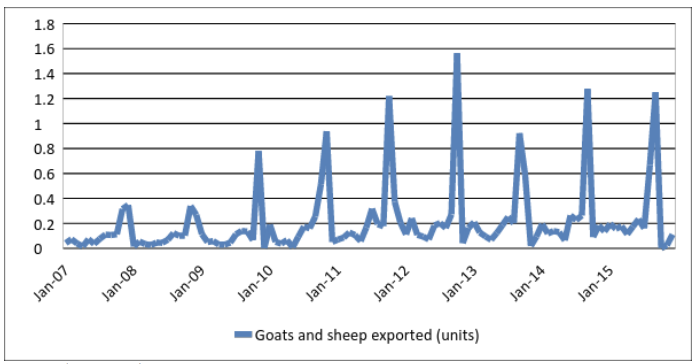
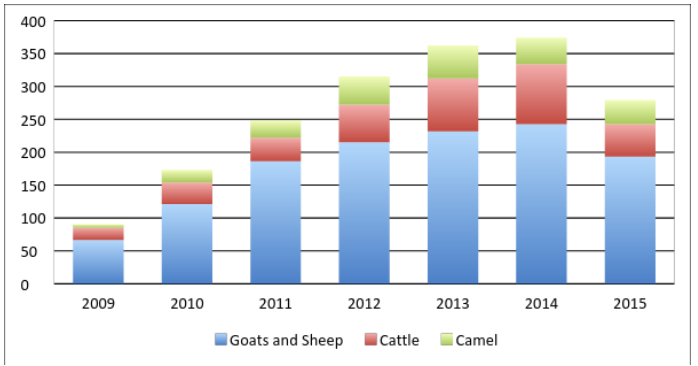
For example, if we take livestock prices from the Food Security and Nutrition Analysis Unit (FSNAU) for the month of the Hajj in each year, we have estimated that dollar earnings from livestock exports through Berbera Port peaked in 2014 at around USD 375 million but fell to around USD 280 million in 2015. This fall in livestock export earnings may indicate falling demand due to changing consumer preferences and/or the condition of Somaliland livestock.
3 Sectoral data
3.1 Types of Livestock and production
3.2 Livestock export patterns vis-à-vis Somaliand
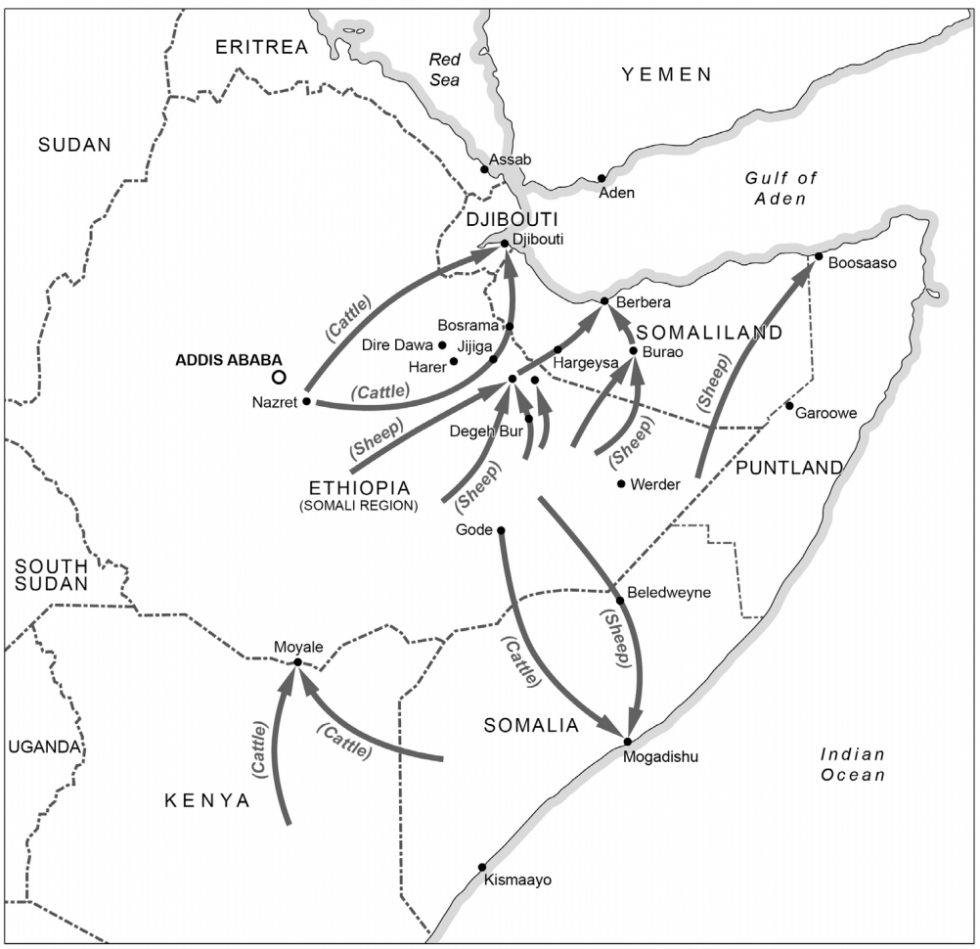
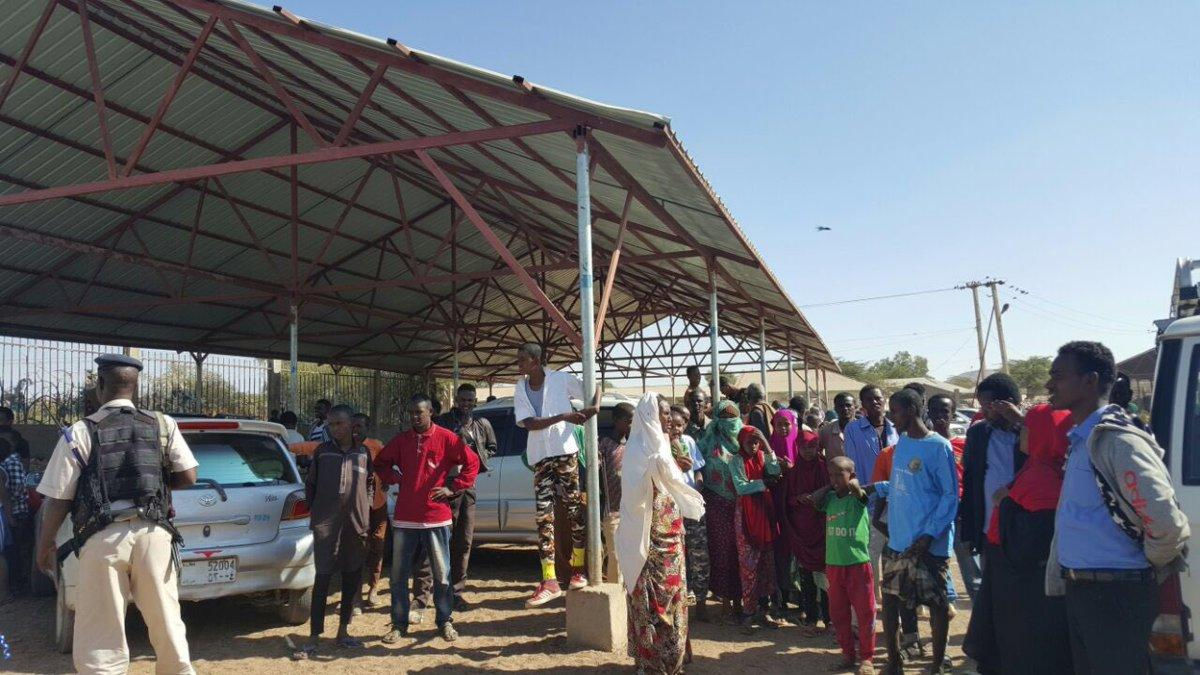
Before 2010 it was one of the largest livestock markets in Somali Region operating each day of the week. In 2006, due to the massive number of livestock traded in the area, a modern livestock market centre was built. Nowadays animals are taken to the other side of the border and trading takes place inside Somaliland before animals are moved towards Hargeisa and Berbera. The border area is arid, with limited pasture and water. A vibrant fodder trade has developed over the years to sustain livestock during the long trek to Hargeisa and Berbera so that they fetch a good price. In early 2010 the Ministry of Agriculture of Ethiopia circulated a letter prohibiting the movement of any fodder beyond Jigjiga town.
3.3 National consumption patterns
3.4 Export market overview
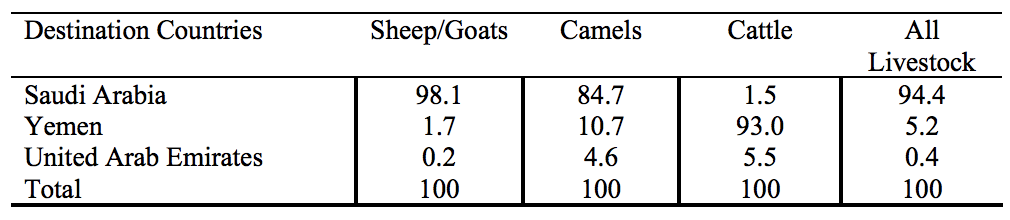
One of the chief driving forces of Saudi Arabia’s high demand for livestock is the demand for livestock associated with both Eid al-Fitr, the feast celebrated at the end of Ramadan (the Muslim month of fasting), and the holy pilgrimage to Mecca, Haj. These two religious events in Saudi Arabia attract tens of thousands of Muslims each year from around the world. The consumption of sheep and goats during this time is significant. Livestock must be imported alive, so they can be blessed and slaughtered according to Islamic law prior to consumption. Livestock exports are highly cyclical with their peak falling during the 70-day period between Eid al-Fitr, and the start of the Haj, or Eid al-Adha. The inherent risks and vulnerability created by dependence on a single market for livestock exports are emphasized by the debilitating impact of the livestock bans over the years in 2000 and as recently as 2016.This dependency, however, is due not so much due to choice as to a lack of viable alternatives.45 There is no other foreign market as ideally suited for Somaliland’s livestock as Saudi Arabia. The unique annual pilgrimage to Mecca in Saudi Arabia guarantees annual peak demand for live animals; additionally, the Saudi port of Jizan is close to Berbera, making it an ideal destination for the export of live animals.
3.5 Dairy production
Fodder production contributes directly to increased body weight and finishing of livestock, thus creating a value-added final product. Currently, fodder availability is unreliable, which drastically affects the finishing of the livestock. This, in turn, affects the final price of the livestock for export-oriented markets. Demand for fodder consumption at domestic as well as for export-oriented markets are usually sourced from Ethiopia.
3.6 Hide and Skins
4 Key Players in Somaliland’s livestock sector
4.1 Key players Somaliland’s livestock market

Emerging companies in Somaliland’s livestock market
In the last decade, Somaliland has witnessed a flourishing of livestock-based companies founded by its influential Diaspora. Below are some of the examples;
Mandeeq Poultry Company
Mandeeq Poultry Company (“Mandeeq”) was established in Hargeisa in 2015 and is the only large-scale poultry farm in Somaliland. It sells fresh wholesale eggs, feed, and chickens to local Somaliland markets, where all other competitors import their products. Mandeeq is the sister company to Mandeeq slaughterhouse, the only slaughterhouse in Hargeisa. After a year of proven operations and sales, Mandeeq aims to expand its operations to meet the local demand for fresh poultry products.
To increase production, Mandeeq will expand its operations by an additional 18,000 egg-producing chickens. The investment will also enable Mandeeq to install an additional commercial flock house as well as feed processing equipment and storage facility, which will enable the Company to blend a specific ratio of feed and supplements.
Rays Sheep and Goat Fattening Farm
Founded in 2012, Rays Sheep and Goat Fattening Farm (“Rays Farm”) is a livestock operation located in the Awdal region of Somaliland. Livestock is one of the dominant sectors of the Somaliland economy. Approximately 70% of the population is involved in animal husbandry, either as nomadic pastoralists (dominant in rural communities), agro-pastoralists, or in the livestock value chain. Sheep and goat meat is favored by most of those in Somaliland, Djibouti and Saudi Arabia and is a major component of their daily diet. However, livestock production is characterized by poor productivity and scarce animal feed,and is aggravated by reoccurring droughts and environmental degradation. Recognizing these challenges, Rays Farm saw an opportunity to create a business that produces animal feed, fattens livestock, and breeds livestock. It is the first of its kind to be established in the Awdal region. Rays Farm with 100 sheep and goats and three different farms. Rays Farm purchased new farmland, procured an additional 700 heads of sheep and goats, and built a shaded area for the cattle. Once the animals are fattened, they are sold locally or exported to Saudi Arabia.
Waayeel Camel Dairy
Waayeel Camel Dairy (“Waayeel”), established in 2014, is a dairy production business which sells camel milk and male calves to the local markets in Burao, Somaliland. Burao is a regional hub for livestock trading and slaughtering, providing sufficient demand for Waayeel’s male calves. The company also delivers fresh milk to its customers at a kiosk in Burao and has a growing and loyal customer base for its dairy products.
Wayeel’s was able to increase its revenue by expanding its production capacity, and to increasing its supply of camel milk. Waayeel Camel Dairy’s output more than doubled and its operations were made more efficient through the purchase of farm equipment and infrastructure upgrades.
5 Regulatory framework and Economic Policy
5.1 Regulation
5.2 Somaliland Livestock Legislation / Regulatory Matrix
5.3 Government economic policy vis-à-vis Somaliland’s livestock sector
6 Challenges
6.1 Urban to rural migration patterns
6.2 Droughts
Somaliland’s cyclical droughts have led to severe reductions in the quantity and quality of grazing pastures and water available for livestock. The effect on livestock herds has been devastating. Some regions have seen herd sizes fall by over half due to death, distress selling and lower birth rates. As a result, some families have lost their entire herd due to successive droughts. Even where livestock are able to survive the drought, their health and weight has been severely reduced due to a lack of available pasture and water. The weak condition of livestock reduces their prices. For example, the price of a goat in Sanaag has fallen by over 70%. This has led to a collapse in the incomes of the already poor farmers in the rural hinterland in Somaliland. Around half of the population are pastoralists and livestock plays a crucial role in supporting their livelihoods. They are a source of income and calories as well as a major capital asset. For many pastoralists, livestock are the only asset they own. Their living standards are intimately connected with the health of their livestock. As the drought has reduced the health of their livestock, it has reduced the income and ultimately, the calories pastoralists are able to consume leading to rising food insecurity, hunger and malnutrition. Many pastoralists have had to take on debt, where available, to meet urgent consumption needs.
Like other governments throughout Less Economically Developed Countries (LDC’s), Somaliland’s government has little ability to overcome climate change that is directly increasing the incidences of droughts which now occur once every other year compared to once a decade. Nevertheless, Somaliland’s government can work with international partners such as the Food and Agricultural Organization (FAO) and the United Nations to put into place safeguarding arrangements and Early Warning Systems to warn farmers and rural pastoralists of incoming droughts.
6.3 Livestock dependency
relationship with its major buyer.
A negative external shock to Somaliland’s livestock sector would not have the large negative effect on macroeconomic stability it currently has if the economy was more diversified. Economic diversification in both exports and output is associated with both an increase in growth and macroeconomic stability and the benefits are particularly large for developing countries such as Somaliland.
6.4 Environmental degradation
6.5 Market failures
Livestock herders often sell at times of distress and lack adequate price information. There is little to no insurance provision to support livelihoods during times of drought. Furthermore, the livestock export sector is monopolistic in practice as it is dominated by a few firms leading to a reduction in the price that pastoralists can gain for their livestock.
6.6 Poor state of livestock sector infrastructure
To ensure greater co-ordination Somaliland’s government should work closely with civil society led organisations. Examples include; associations such as Livestock Export Association, Meat and Milk Association, Somaliland Veterinary Association and the United Livestock Professionals of Somaliland Association. Increased government-civil society collaboration in the livestock sector can lead to better interaction between the businesses community and government.
7 Future Outlook and Opportunities
7.1 Modernisation of Berbera port and the implications of this on Somaliland’s livestock sector
7.2 Employment opportunities
7.3 Opportunities for private entrepreneurs to add value
Another avenue for Somaliland’s government to solicit investment in the livestock sector includes a greater focus on Public Private Partnerships (PPP’s) which act as a strong alternative to other forms of funding. In particular, PPP’s can be used to ensure there is greater investments in regional cities outside the capital Hargeisa. Here, ambitious entrepreneurs can partner with local government to improve the efficiency and productivity of the livestock sector in their respective regions. Nevertheless, for PPP’s to succeed there is a strong need for formulating policy and regulatory frameworks for the PPP implementation
and reviewing current PPP structures and management practices.