
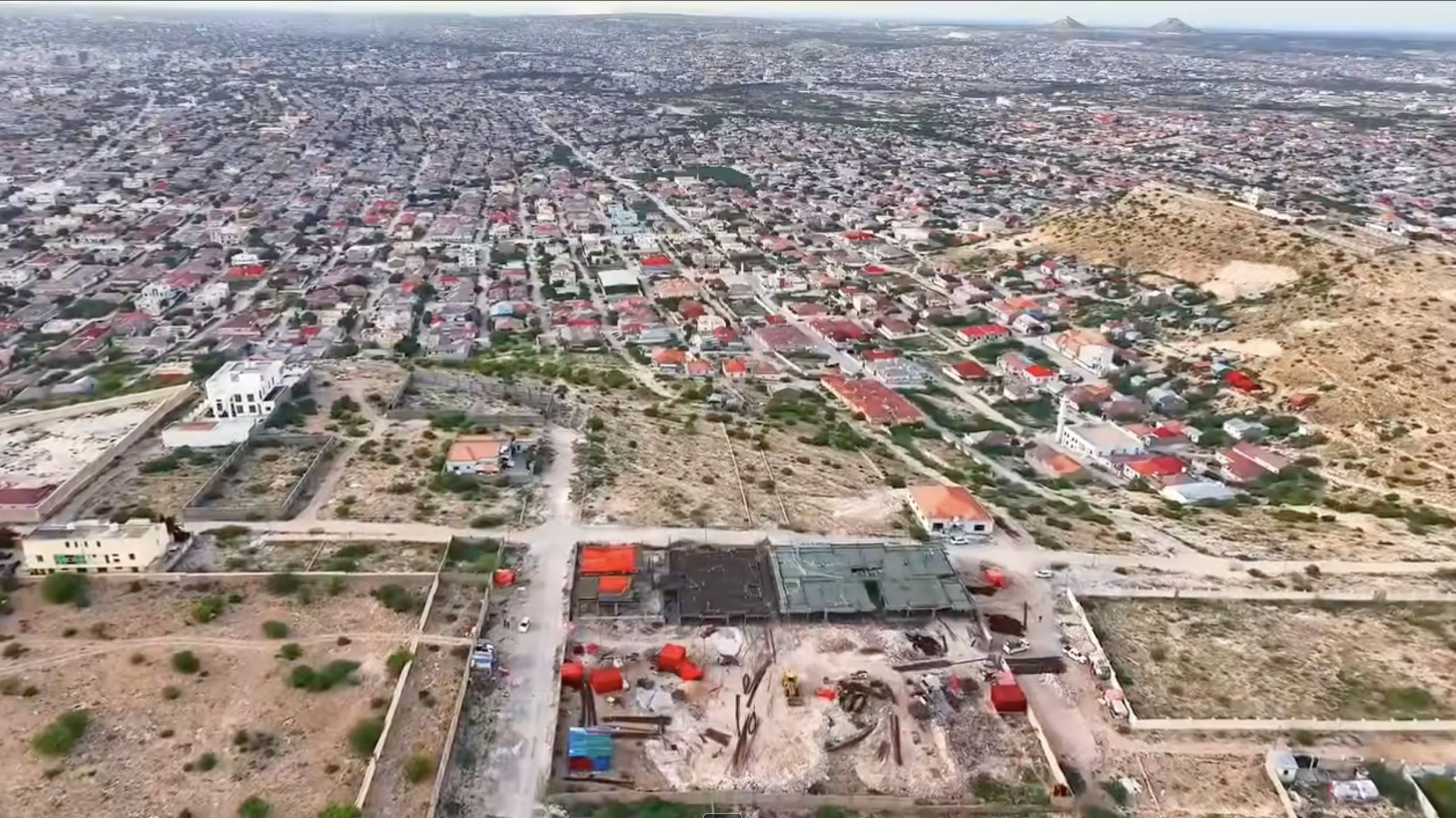
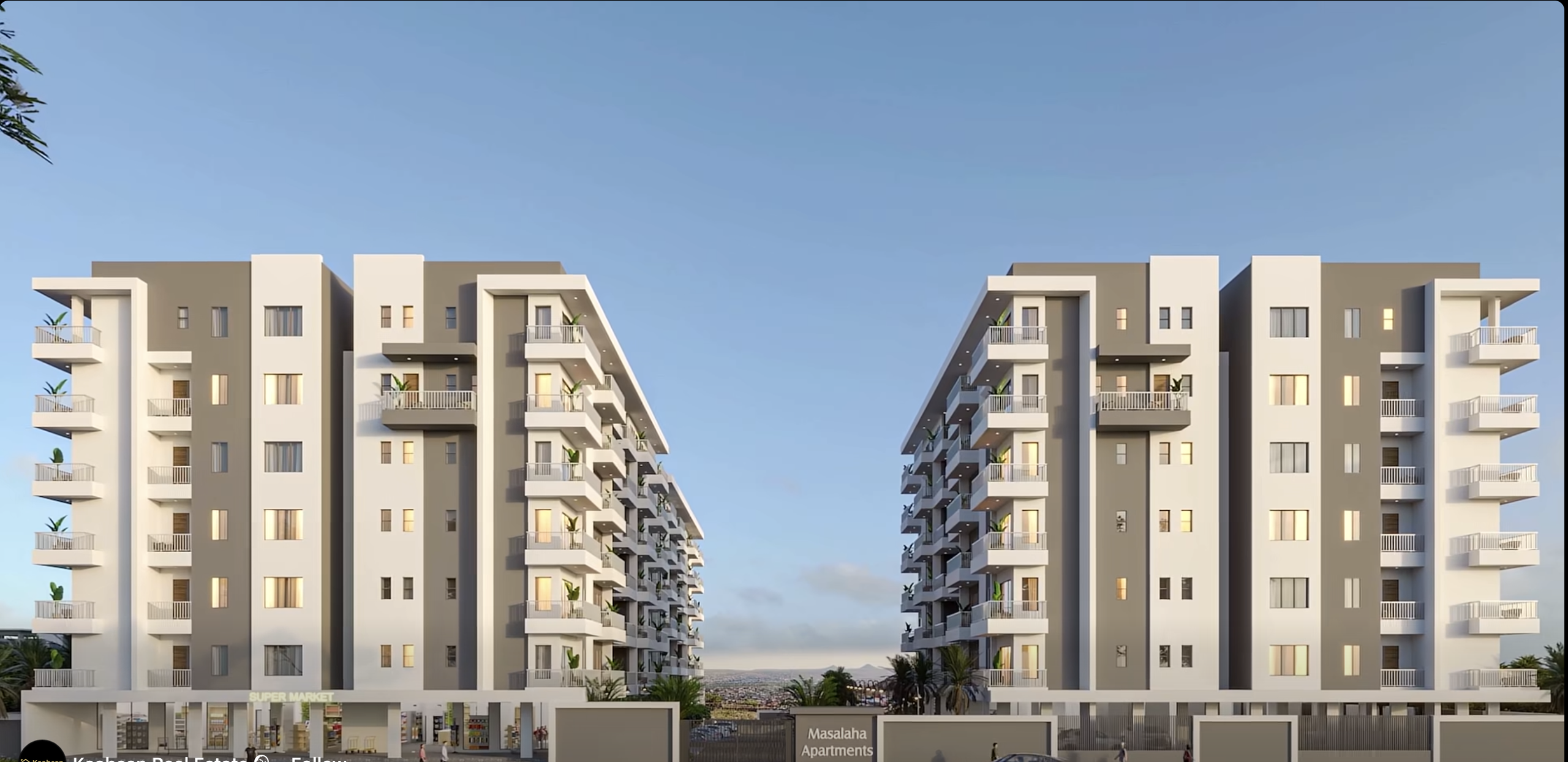
Kaabsan Real Estate’s launch of Masalaha Luxury Apartments this month was reported as a property announcement. It is also something else: a data point. The first prospective purpose-built luxury apartment block in Hargeisa, backed by an institutional developer and a local bank, in a district that already hosts Somaliland’s first internationally branded five-star hotel, tells you something about the direction of travel in Somaliland’s real estate market.
What is Driving Demand?
The Masalaha Luxury Apartments launch did not emerge from nowhere. Several forces have been building in Hargeisa’s property market for years, and they are converging now.
Urbanisation. Somaliland’s urban population has passed 53%, according to government figures cited in a February 2025 analysis by Geeska. Hargeisa, as the capital, absorbs the largest share of internal migration. More people in the city means more demand for housing – but it also means more pressure on land, which feeds directly into the logic of vertical development.
Rising land prices. Average plot prices in Hargeisa have risen from approximately US$20,000 to US$30,000–35,000 over the past five years, according to International Investment analysis published in January 2026. When land costs rise, the economics of apartment development — spreading that land cost across multiple units — become more favourable relative to building individual villas. Developers are responding to a signal the market is sending.
The diaspora factor. Somaliland’s diaspora is among the most economically engaged in Africa relative to the size of the country. The flow of remittances and direct investment has been a consistent driver of the construction boom in Hargeisa over the past decade. What is shifting is the product preference. A diaspora buyer returning infrequently — or buying as a long-term investment rather than a primary residence — often prefers a managed apartment to a villa that requires ongoing oversight. Masalaha Luxury Apartments, with its gym, security, parking and on-site shops, is designed around exactly that profile.
The anchor effect of the Serene Sarovar. When Sarovar Hotels — part of France’s Louvre Hotels Group — chose to open Somaliland’s first internationally branded five-star hotel in Masalaha in August 2025, it was not a random site selection. The company’s chairman described Somaliland as a “high-potential emerging market.” International hospitality brands conduct rigorous location due diligence. Their presence in a district signals to other developers and buyers that the area has been judged viable by an outside institution with no local political stake in the answer. That signal is more powerful than any marketing brochure.
A maturing product expectation. The generation of Somaliland professionals working in Hargeisa today has often studied or lived abroad. They have experienced managed apartment living. The expectation that quality housing means a compound of individual villas is no longer universal — and developers like Kaabsan, with their existing gated communities, have already demonstrated there is a buyer for higher-specification residential product.
This piece uses the project as a lens. What does the pricing actually mean? How does it compare to apartment markets in nearby cities? And is Hargeisa genuinely moving towards a new era of urban apartment living – or is this still an isolated development in a market that is not yet ready for it?
Understanding the Pricing
Masalaha Luxury Apartments is priced at approximately US$70,000 for the smallest unit — a 2-bedroom apartment of around 107 sqm — rising to approximately US$110,000 for a 5-bedroom apartment of around 272 sqm. The pricing has been earmarked through the project launch and is approximate; official figures are available directly from Kaabsan Real Estate.
Translated into price per square metre, the range looks like this:
Masalaha Luxury Apartments – price per sqm
| Unit type | Approx. size | Approx. price | Price per sqm |
|---|---|---|---|
| 2-bedroom | 107 sqm | US$70,000 | ~US$654/sqm |
| 5-bedroom | 272 sqm | US$110,000 | ~US$404/sqm |
Pricing approximate, sourced from the project launch. Figures have not yet been publicly listed by the developer.
The gap between US$654/sqm and US$404/sqm is not unusual – it reflects a pattern common across property markets globally. Larger units cost more in absolute terms but less per square metre, because fixed costs (structural work, lift shafts, communal areas, fit-out) are spread over more floor space. For a buyer comparing units, the per-sqm figure is a useful guide; the total price is what they actually pay.
At US$70,000 entry, the 2-bedroom unit is accessible by the standards of the diaspora buyer who might be comparing this against a deposit on a flat in London or Minneapolis. The question worth asking is not just whether the price is affordable – it is whether it represents fair value for what is on offer, and how it sits relative to comparable markets in the region.
How Hargeisa Compares — a Regional Benchmark
Formal, transaction-based property price data is scarce across the Horn of Africa and East Africa generally. What follows is an indicative comparison, drawn from publicly available developer listings, property portals and market reports, as cited. The purpose is context, not valuation. Readers considering a purchase should treat these figures as a starting point for their own due diligence, not a definitive price guide.
Indicative apartment sale prices — selected regional cities
| City | Indicative range (US$/sqm) | Segment | Source / notes |
|---|---|---|---|
| Hargeisa (Masalaha) | ~US$404–654 | New-build luxury | Kaabsan launch pricing (approx.) |
| Addis Ababa | ~US$800–2,000 | Mid-to-prime residential | Bamboo Routes / The Africanvestor, Sept 2025; prime districts (Bole, Kazanchis) at the higher end |
| Nairobi | ~US$700–1,200+ | Mid-market (Kilimani/Westlands) | Kenya Property Centre listings; premium developments (e.g. GTC Westlands) significantly higher |
| Mogadishu | ~US$810–1,250 | City-centre apartments | Somalia Investor Magazine; Raas Real Estate listings; limited formal data |
| Djibouti City | No comparable data | — | Salaam City (a large-scale residential development by Salaam Real Estate) does not publish sale prices; contact-only model |
| Garowe | No comparable data | — | Emaad Properties (Nugaal Hills) and Amal Real Estate offer villas, not apartments; no published per-sqm sale figures |
All figures are indicative and based on listing prices, not closed transactions. Regional data is drawn from publicly available sources as noted; accuracy varies. Exchange rates applied: KES 129 = US$1 (approx. mid-2025).
The comparison reveals something worth sitting with. Hargeisa’s Masalaha pricing — at the lower end of this range — reflects a market that is still in earlier stages of formation relative to Addis Ababa or Nairobi. That cuts two ways.
For the investor, it represents a relative value opportunity. Quality, managed apartment stock in a stable city with growing demand and limited supply of this product type is a credible long-term hold. The entry price is lower than comparable new-build luxury product in Nairobi’s established suburbs or Addis Ababa’s prime districts.
For the market sceptic, the lower pricing also reflects real constraints: a predominantly cash-based transaction market, the absence of a functioning mortgage sector, limited price discovery (there are few comparable transactions to benchmark against), and a resale market that is still nascent. These are not reasons to avoid the market — they are reasons to understand it clearly before entering.
The Mogadishu comparison is instructive in a different way. Mogadishu apartment prices, where data exists, are broadly similar to or higher than Hargeisa’s Masalaha pricing — despite the significant difference in security environment and institutional stability between the two cities. That gap in risk-adjusted value is something the diaspora investor has historically recognised, and it partly explains the consistent flow of diaspora capital into Somaliland’s property market.
The Questions Investors Should Ask:
The case for Masalaha Luxury Apartments is coherent. So is the case for caution on any off-plan purchase in an early-stage market. A serious buyer should go in with clear answers to the following:
Title and ownership: What is the legal basis for ownership? Is the title on the individual unit, or on shares in a company? How is the land held? Somaliland’s property registration system is functional but not yet fully formalised, and legal clarity on title matters enormously for a long-term hold.
Service charges and management: Who manages the building post-completion? What does the monthly service charge cover — and what happens if it is not paid by other residents? A luxury block with a poorly managed common fund deteriorates quickly.
Financing terms: Darasalaam Bank is providing financing for buyers who need it. What are the terms — the profit rate, the repayment period, the down payment requirement? These figures will determine whether the financing is genuinely accessible or prohibitively priced for most buyers.
Completion and handover: What is the contractual completion date? What are the protections if the timeline slips? Kaabsan’s track record on Rugsan Gardens and Aragsan Village provides some reassurance, but the question is worth asking directly.
Exit and resale: Is there a functioning resale market for apartments in Hargeisa? At the moment, largely not — this is one of the first developments of this type. A buyer going in should assume a medium-to-long hold period rather than a quick flip.
Our View…
Masalaha Luxury Apartments is significant not primarily because of its amenities or its architecture. It is significant because of what it represents: a credible developer, backed by a local bank, launching a genuinely new product type in a market that has not previously had one.
The pricing sits at the lower end of the regional range — which reflects both the opportunity and the market’s early stage. Hargeisa is not Nairobi or Addis Ababa. It does not have their depth of transactions, their mortgage infrastructure, or their volume of institutional investment. What it has is stability, a functioning government, a growing urban population, a highly engaged diaspora, and a track record of absorbing private investment and producing real returns for early movers.
Whether Masalaha Luxury Apartments becomes the first of many such developments in Hargeisa – or remains a notable outlier – depends on what comes next: whether the financing is taken up, whether the units sell at the asking price, and whether the resale market begins to form. Those are questions this market will answer over the next three to five years.
The conditions for a genuine apartment market in Hargeisa are real. This launch is the clearest evidence yet that some developers believe it too.
For the full project details, see our news report: Kaabsan Real Estate launches Masalaha Luxury Apartments. For more on Somaliland’s property sector, see our Real Estate sector guide and Country Guide.
Pricing data in the regional comparison table is indicative only and sourced as noted. SomalilandBiz has not independently verified transaction prices in any of the cities listed. Readers should conduct their own due diligence before making any investment decision.